

Raw sewage continues to flow through streets and residential yards in Gonaskaap, Makhanda, just weeks before South Africans head to the polls to elect new local government leaders.
In June, the South African Human Rights Commission declared the Makana Local Municipality’s ongoing water and sanitation crisis a gross violation of human rights and recommended that the municipal council be dissolved.
ALSO READ:
2026 local govt elections: ActionSA picks Ayanda Allie as its Gauteng ambassador
LGE 2026: CoJ mayoral candidates dissect crime, economic growth and service delivery
LGE 2026: Blind & visually impaired Bloemfontein voters flag accessibility concerns
Power, money: suspected political hits surge ahead of LGE 2026
LGE 2026: Coalition governance not always chaotic, suggests new research
Yet residents said little has changed. Many remain without reliable access to basic services, living in conditions they believe threaten their health and dignity.
During a recent visit to the Eastern Cape town, Eyewitness News found communities grappling with overflowing sewage drains, water shortages, unsafe housing and polluted waterways.
The crisis reflects years of financial and governance challenges at the municipality, with residents demanding accountability and meaningful intervention.
RESIDENTS LIVE WITH OVERFLOWING DRAINS
In Gonaskaap, the sewage crisis begins outside the home of resident Funeka Nesi.
Two blocked drains regularly overflow, sending dirty water into the street and exposing residents to the stench of raw sewage.
Nesi said the smell becomes unbearable on hot days, making even ordinary activities such as eating a meal unpleasant. She is particularly concerned about the impact on children and elderly residents.
“We don't feel good about this because we have old people and children. Even when we are eating, we are breathing in sewage smell,” she says.
A short distance away, Byron Duiker and his partner, Lucretia Vlotman, face similar conditions, with sewage surrounding their home.
Duiker said his family, including their five-year-old daughter, has been getting sick. He is also concerned about the lack of adequate medical treatment.
“My children are getting sick and us as well. We also have a five-year-old daughter and every time we go to the clinic, they don't have medicine, and they can't treat us,” he says.
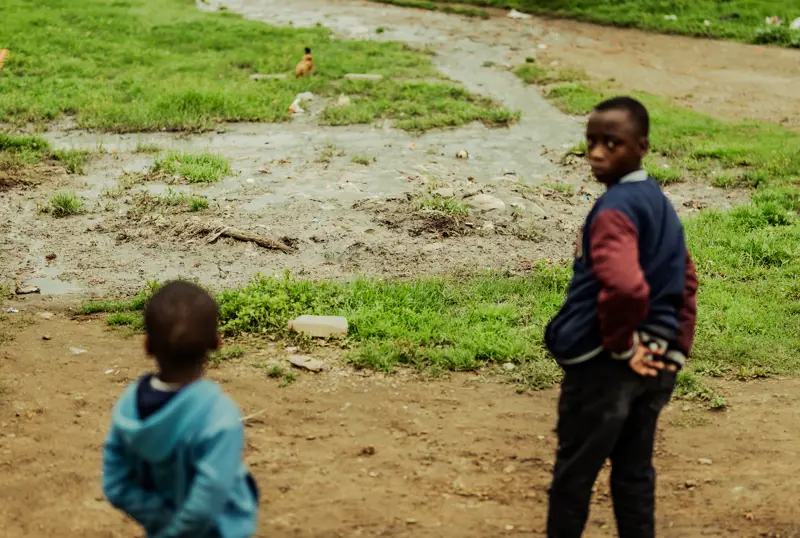
The problem extends to Scott's Farm, where some residents live in mud houses alongside a polluted stream contaminated with human waste.
For 52-year-old Antoinette Swaartbooi, who has lived in the area for more than 20 years, heavy rainfall causes the stream to overflow, making it dangerous to cross. She often helps schoolchildren navigate the water on their way to school.
The absence of toilets has deepened the problem, with residents resorting to dumping human waste into the stream.
“There's always water flowing here because there's a big dam up the stream. When it is full, the water runs through here. People also dump human waste here because there are no toilets,” she said.
The dangers of overflowing waterways were highlighted in February when a Mary Waters Secondary School pupil drowned after falling into the Mtyana River while walking home to Xolani in Joza during severe flooding.
Scott's Farm residents are calling for a safe pedestrian bridge across the river to prevent further tragedies.
With the local government elections approaching, Swaartbooi and her neighbours see another opportunity to demand the basic services they have been waiting years to receive.
DRY TAPS, LEAKING PIPES AND FAILING INFRASTRUCTURE
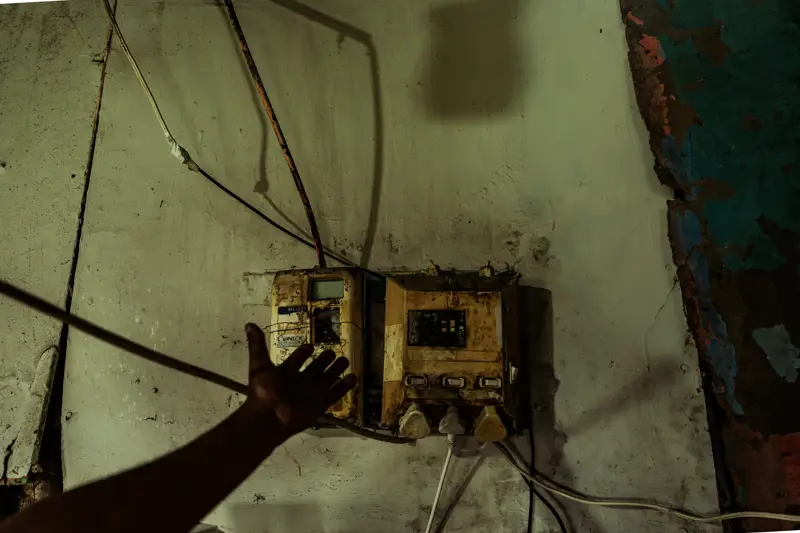
Alongside the sewage crisis, residents across Makhanda continue to experience unreliable water supplies despite hundreds of millions of rands having been spent on water infrastructure.
In 2019, humanitarian organisation Gift of the Givers drilled 11 boreholes to help communities access water. The organisation said two boreholes at Ntsika Secondary School supply drinking water to communities, including Joza, Ntsika and the Khayelitsha informal settlement.
However, ageing infrastructure, failing pumps and inadequate maintenance continue to undermine the municipal supply.
For pensioner Elsie Williams of Vergenoeg, a leaking pipe outside her home has become an additional financial burden. She said the leak has gone unrepaired for more than four months despite repeated complaints, forcing her to spend part of her old-age grant on wasted water.
Even a visit by the mayor failed to resolve the problem.
Williams said municipal workers dug a hole outside her home but left the pipe unrepaired.
“The mayor also came here one day, and we were all standing here around the wall, and we showed her, here's the problem. She also said that here is the problem and we will see what we can do.
“And then after that the tractor came and made a hole here, but nothing was done to the pipe. So, I don't know why it was necessary to make a hole here,” she says.
Williams is also worried that the open pit could endanger children playing nearby.
“Now it's a hazard for the children also. They play here, and they can fall into this dam, and what is going to happen about that,” she said.
Retired civil engineer and water activist Peter Sturrock said the deterioration of bulk water infrastructure has compounded the crisis.
He describes the town's intermittent supply as “water shedding”, with water cut off at night and restored during the day. He says repeated pressure changes are damaging ageing pipes and contributing to leaks.
Sturrock said the James Kleynhans Water Treatment Works, where expansion began more than a decade ago, remains below its planned capacity. The facility produces between 10 and 12 megalitres of water a day, against a target of 20 megalitres.
He added that three of the five pumps at the facility's pump station are also away for repairs, raising maintenance concerns.
Sturrock believes the town's bulk water supply could be stabilised within six months to a year if urgent repairs and upgrades were prioritised.
“I believe if the municipality had some kind of acknowledgement of their failures and put their mind to implementing improvements. But there just seems to be a lack of will and determination,” he said.
He accuses the municipality of failing to communicate adequately with residents about efforts to restore reliable supplies, saying emails, proposals and attempts to engage officials often go unanswered.
“The general frustration is that the municipality is non-committal and non-communicative.
There needs to be broader communication in terms of what is happening at the bulk supplies, but that is not forthcoming,” he noted.
DECADES OF WAITING FOR A SAFE HOME
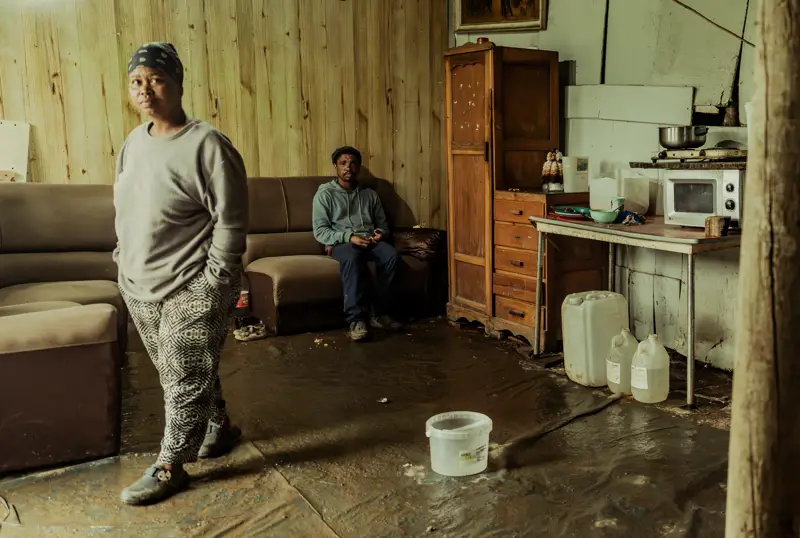
Beyond water and sanitation, some Makhanda residents are living in deteriorating homes that offer little protection.
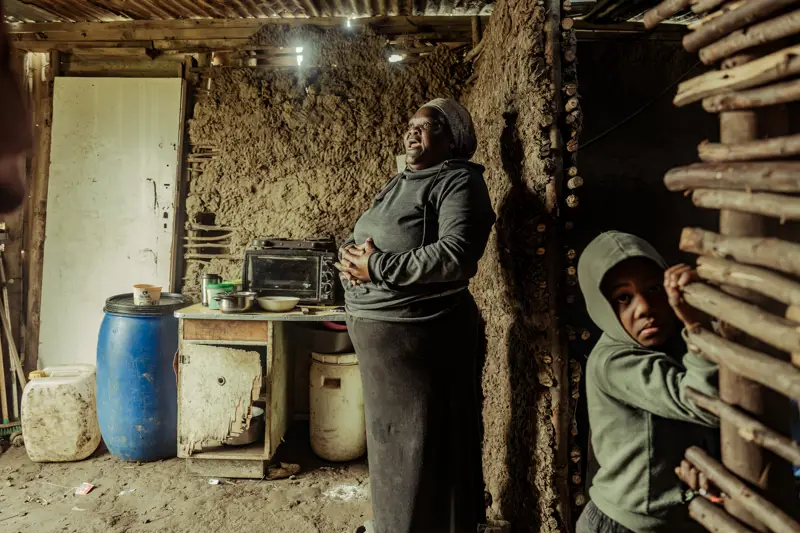
For 59-year-old Nokonwaba Sam, the wait for a government house has stretched over 32 years.
She continues to raise her family in a crumbling mud house in Phaphamani, where she lives with family members, including seven grandchildren.
When it rains, water pours through the leaking roof, soaking the walls and leaving the family struggling to stay dry. Sam says she covers her grandchildren with plastic sheets at night to protect them from the rain.
The persistent leaks have weakened the structure, leaving her afraid that the house could collapse.
“The situation is very heartbreaking for me because my house is collapsing. My heart becomes heavy every time it rains because I know what I'm up against,” she says.
After decades of waiting for assistance, Sam says she has lost faith in promises to improve residents' lives and does not intend to vote in the upcoming elections.
Her experience highlights the housing challenges facing residents who continue to wait for safer living conditions and improved municipal services.
COMMUNITY INVOLVEMENT
With municipal intervention slow to materialise, some residents have taken matters into their own hands by cleaning polluted waterways and finding alternative ways to cope with water shortages.
Community leader Nosipho Moyikwa says volunteers recently removed nappies, furniture and other waste from a stream that feeds into a nearby river.
She says they have been working with River Rescue to clean the waterways, while Gift of the Givers has helped communities cope with water shortages by providing water tankers when taps run dry.
Moyikwa says tests conducted in partnership with Rhodes University in 2022 found that the stream water was unsafe, yet children continue to swim in it.
“Every time we clean the streams with River Rescue, the water flows properly. We also partnered with Rhodes University to test the water because the stream runs past a children's
play park. The results showed that the water is not safe, but children continue to swim there,” she says.
Moyikwa says residents want to work with the Makana Local Municipality to find sustainable solutions, but their efforts to establish cooperation have been unsuccessful.
She says the municipality previously ran water-saving campaigns at taxi ranks and schools in the township, prompting community members to approach officials about working together.
“We are not fighting with the municipality, we want to come together and find solutions, but they showed no interest in working with us,” she says.
POLITICAL WILL AND ACCOUNTABILITY NEEDED
Sturrock believes Makhanda's water and sanitation problems could be addressed through stronger political leadership, better maintenance and greater accountability.
He warns that deteriorating infrastructure and overflowing sewage subject residents to significant health risks.
“This means people are living in what one can describe as very unhygienic circumstances where people have sewage running through their backyards. The risks of getting disease spread are quite high,” he says.
Sturrock says residents expect a more responsive local government after the elections, regardless of which party or coalition takes control of the municipality.
“We've got an election coming up, and in Makhanda we are all very positive that whatever
municipality we have after the election, whether it's a coalition, whether it's one or either of the large parties, whether it's the same ANC that is running the municipality, residents just won't stand for this blocking by the municipality.
“And I think we are all going to look for something very more positive in the new year,” he said.
With South Africans preparing to vote on November 4, Makhanda's persistent service delivery failures remain a pressing concern for residents seeking reliable water, adequate sanitation and safe housing.
Eyewitness News has reached out to the Makana Local Municipality for comment and is yet to receive a response.
Never miss a major story. Get breaking news and the latest developments from South Africa and beyond as they happen.


