
Nelson Mandela Bay's struggling municipal services are increasingly becoming costly for the people and businesses that depend on them, with unreliable electricity and water, mounting financial losses and questions over the metro's ability to turn available funding into functioning infrastructure.
For businesses operating in Nelson Mandela Bay, municipal services are more than a monthly bill.
They are the infrastructure that keeps factories producing, logistics operations moving and businesses open.
ALSO READ: NMB | The story of a tri-town metro: Power struggles, political instability & slow decline
But as electricity and water systems come under growing pressure, companies are increasingly having to absorb the cost of unreliable municipal services, while the municipality itself faces significant financial losses.
The metro's electricity service is projected to run a deficit of about R1.75 billion in the 2025/26 financial year.
That follows electricity losses of around R1.32 billion in 2024/25.
And the latest mid-year figures suggest the problem has not been resolved.
By the end of December 2025, the metro had already recorded around R840 million in electricity losses.
For businesses, the financial pressure is being felt alongside rising electricity costs.
Nelson Mandela Bay Business Chamber CEO, Denise van Huyssteen, said electricity has become one of the biggest cost pressures facing companies in the metro.
“The cost of electricity has become completely unsustainable,” she explained.
With manufacturing accounting for a significant part of the local economy, Van Huyssteen noted that the reliability of basic infrastructure is critical to keeping major factories operating.
“You can't run a factory if you don't have reliable infrastructure services.”
WATER LOSSES ADD TO THE PRESSURE
The electricity crisis is not happening in isolation.
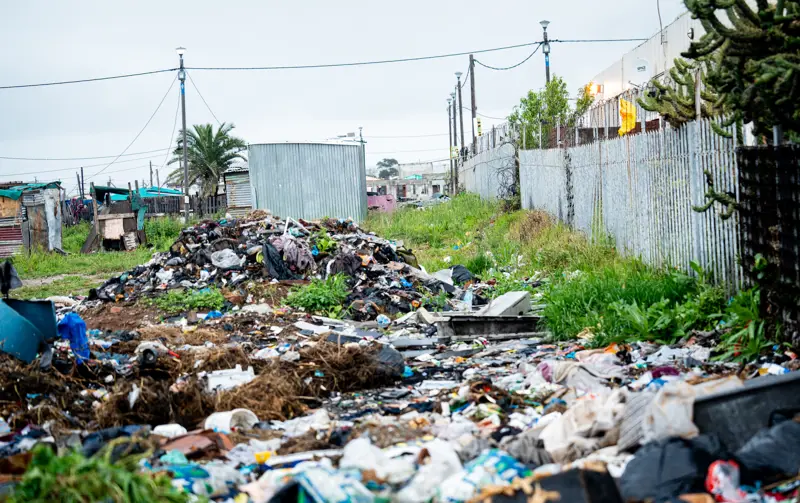
Nelson Mandela Bay is also losing significant volumes of water through non-revenue water.
In the 2024/25 financial year, the metro reported non-revenue water of 57.62%.
By the first five months of 2025/26, that had increased to 60.39%, with more than 40 million kilolitres of water lost.
The municipality's own mid-year assessment says its existing strategies to address water and electricity losses have not produced the desired results.
For businesses, this can mean finding alternative ways to keep operations running when municipal supplies fail.
But the consequences are potentially even more severe for ordinary households.
RESIDENTS DON'T ALWAYS HAVE A PLAN B
The Nelson Mandela Bay Civil Society Coalition said residents are becoming increasingly despondent as failures persist across basic municipal services.
Coalition spokesperson, Zukile Madakane, said rising tariffs are squeezing residents.
His concern is that many households don't have the financial means to protect themselves from municipal failures.
A business or wealthier household may be able to install solar panels, buy a battery, run a generator or invest in water storage.
For many residents, those options are out of reach. That creates an unequal experience of municipal failure.
Those who can afford alternatives can insulate themselves from some of the disruption.
Those who cannot are left to absorb it.
IS THE PROBLEM REALLY A LACK OF MONEY?
Civil society also questions whether Nelson Mandela Bay's infrastructure problems can be explained simply by a shortage of funding.
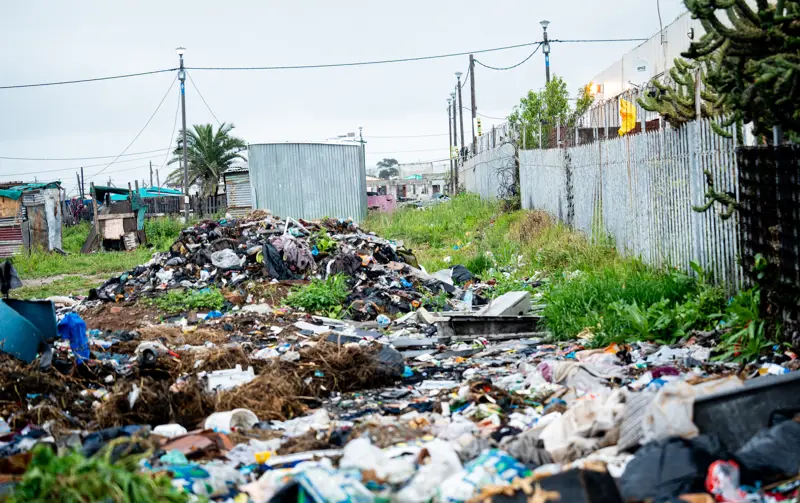
The metro has repeatedly underspent on government grants, with funds intended for infrastructure and service delivery returned to the National Treasury.
Parliament was told in 2025 that around R1.2 billion in unspent grants had been returned.
For Madakane, that raises questions about the municipality's ability to plan, implement and spend the money it receives.
“You can't say a municipality that keeps returning grants to the National Treasury has got a problem with a shortage of funds,” he said.
The issue is particularly significant given the metro's infrastructure backlog.
Money allocated for infrastructure that is not spent cannot translate into completed roads, upgraded networks, improved water systems or other projects needed by communities and businesses.
A QUESTION OF LEADERSHIP
The financial and infrastructure problems are compounded by concerns over the metro's administrative stability.
Parliamentary oversight has raised concerns about vacancies in senior management positions, while civil society organisations say engagement with the municipality's political leadership remains difficult.
For business, that uncertainty matters.
Van Huyssteen says investors need confidence that the infrastructure supporting their operations will be reliable and that the municipality will provide a stable environment in which to operate.
But she also says business remains willing to work with the municipality to turn the metro around.
That creates a potential path forward, but one that requires more than infrastructure spending alone.
THE COST OF MUNICIPAL FAILURE
For Nelson Mandela Bay's businesses, municipal failure can mean additional operating costs, disrupted production and uncertainty over future investment.
For residents, the consequences can be even more immediate.
When the electricity goes off, a household with no generator or solar system cannot simply switch to an alternative.
When the water stops, a family without storage or another source has little choice but to wait.
And when tariffs rise, those households still have to pay.
The central question facing Nelson Mandela Bay is therefore not simply how much money is being spent on infrastructure.
It is whether the municipality can turn the money it receives into reliable services, and whether it can rebuild the trust of the residents and businesses that depend on those services.
Never miss a major story. Get breaking news and the latest developments from South Africa and beyond as they happen.


