
With local government elections looming, Nelson Mandela Bay faces a familiar question: can the next administration restore stability to a metro struggling with political turbulence, financial pressure and failing infrastructure?
With just weeks to go before South Africans head to the polls, attention is once again turning to the Nelson Mandela Bay Metropolitan Municipality.
The metro, which encompasses Gqeberha, Kariega and Despatch, is home to about 1.3 million people, and its economy has been anchored by manufacturing, the automotive sector, agriculture, logistics and tourism.
At the same time, high unemployment, poverty and food inequality are part of the daily realities resulting from political instability in the municipality.
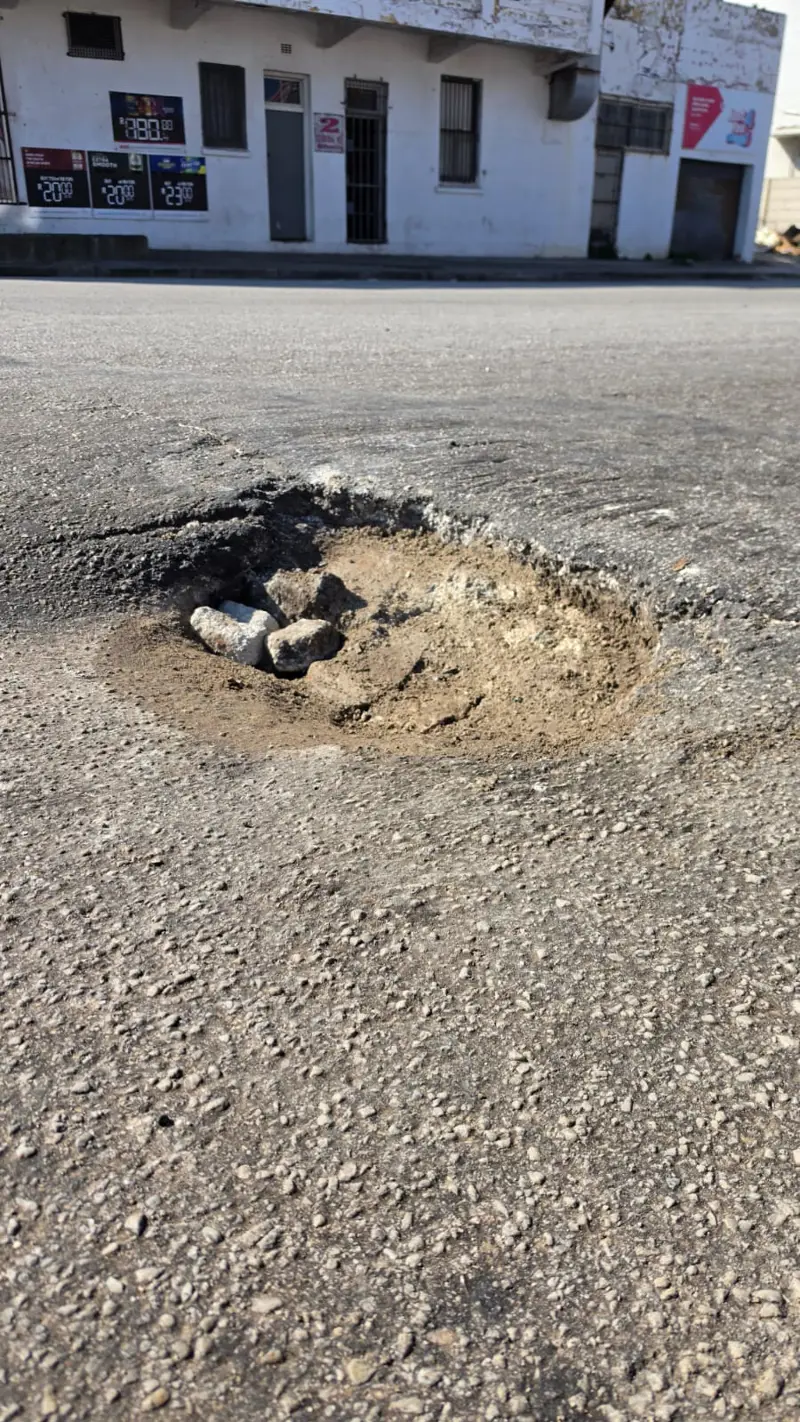
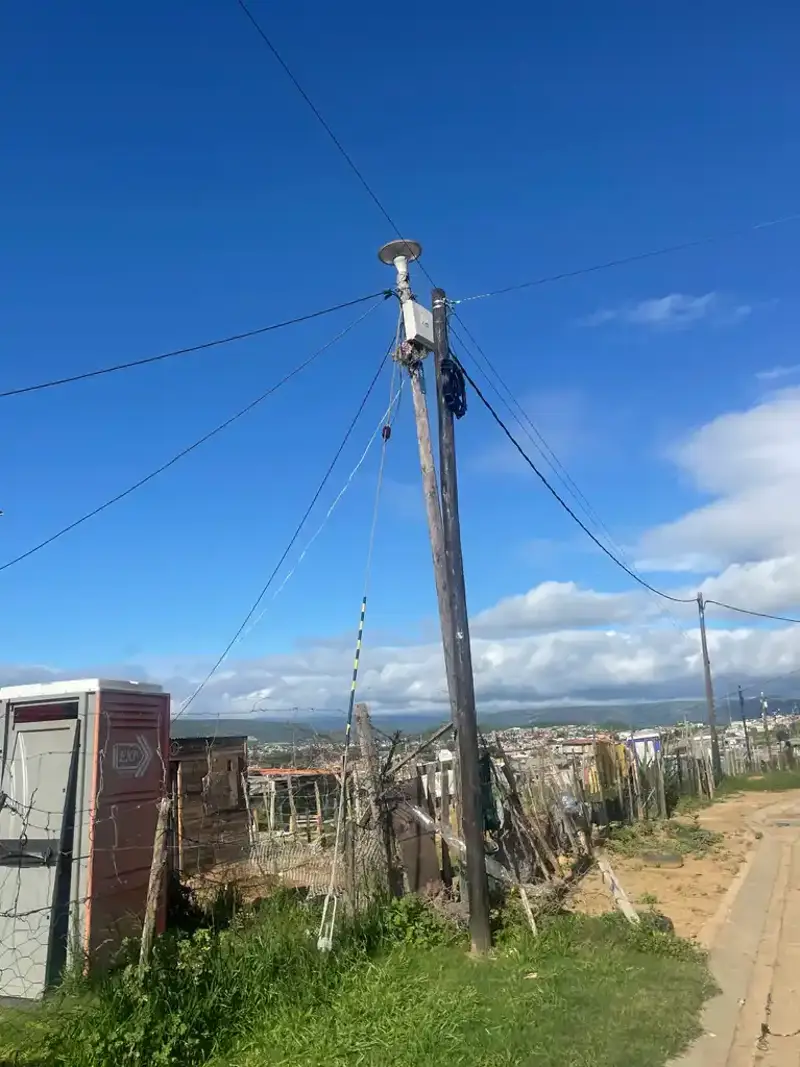
In Gqeberha, the deterioration of infrastructure is hard to miss: broken streetlights leave parts of the city in darkness, while potholes lurk on poorly lit roads, becoming an increasingly familiar part of life in the metro.
And for many residents, the consequences are experienced not in audit reports or council chambers, but through water outages, housing delays and frustration with local government.
FIVE MAYORS IN ONE TERM
Since the 2021 local government elections, Nelson Mandela Bay has had five executive mayors and five coalition governments.
The constant changes in political leadership have repeatedly altered the balance of power in council, creating uncertainty not only for politicians but also for the administration responsible for running the city.
Political analyst Ongama Mtimka weighed in on the mayoral musical chairs.
He says the instability is a result of competing political interests.
“I can bet that in every instance that we've lost a mayor and, I dare say, municipal manager, it was because of competing narrow interests of individual politicians.”
The political turbulence has coincided with growing concerns about the municipality's administrative capacity.
In its 2024/25 audit outcomes, the Auditor-General found that Nelson Mandela Bay had the highest senior management vacancy rate of any metropolitan municipality in the country.
The metro has also been warned that, without urgent action, service delivery and public trust could deteriorate.
Mtimka, however, argues that the problem is not confined to political leadership.
He says political instability has weakened the municipal administration's ability to maintain services and plan for the long term.
The result, he says, is that institutional knowledge and capacity have been lost.
“Municipalities have even forgotten what they used to know.”
WHEN POLITICAL INSTABILITY BECOMES A SERVICE-DELIVERY PROBLEM
The impact of that instability can be seen in the condition of the city's infrastructure.
The city's electricity function has also been operating at a loss since 2018.
Across parts of Gqeberha, broken streetlights and traffic signals have become a familiar sight, while ageing and poorly maintained infrastructure points to gaps in the municipality’s capacity for maintenance.
Mtimka says the political turmoil has affected not only the delivery of services today, but also the municipality's ability to maintain infrastructure over the medium and long term.
That is particularly evident in the metro's water crisis.
A municipal official told councillors in February that more than 60% of the city's water had been lost between July and November 2025.
For residents, the figures have translated into repeated interruptions and uncertainty over when water will return. Residents in Malabar have responded by creating their own backup system.
Five community members volunteered to build foundations with donated brick and mortar and installed water tanks at homes that serve as collection points during outages.
The initiative began after a private donor supplied tanks and building materials.
For residents, however, the tanks are a backup, not a solution.
One resident who lives in a block of flats with one of the tanks says residents have sometimes gone days without water.
And when the tanks run dry, households are left to buy water themselves.
“There's six of us that use the toilet. Six of us that have to bath.”
A CITY UNDER FINANCIAL PRESSURE
The municipality's financial position has added another layer to the crisis.
In the 2024/25 financial year, the municipality underspent its budget, using only about R1.3 billion of its R1.8 billion capital budget, roughly 76% of the available allocation.
The Auditor-General also found that the metro took 189 days to pay its creditors.
At the same time, billions of rands have been recorded in irregular, unauthorised, fruitless and wasteful expenditure.
Mtimka says the municipality's financial difficulties are partly structural.
Unemployment has weakened the revenue base, while problems in municipal financial management have compounded the pressure.
“The revenue base of this municipality has dwindled out of structural factors. People just are not employed. Plus, you are so corrupt that even your national grants are not saving you.”
The financial pressure has also affected indigent households.
The municipality reduced its monthly free electricity allocation from 75 kilowatt-hours to 50, while the free water allocation was reduced from 8 kilolitres to 6.
Mtimka says the problem cannot simply be attributed to poor residents receiving free services, arguing that municipalities receive national funding for indigent households but must properly maintain the databases that determine who qualifies.
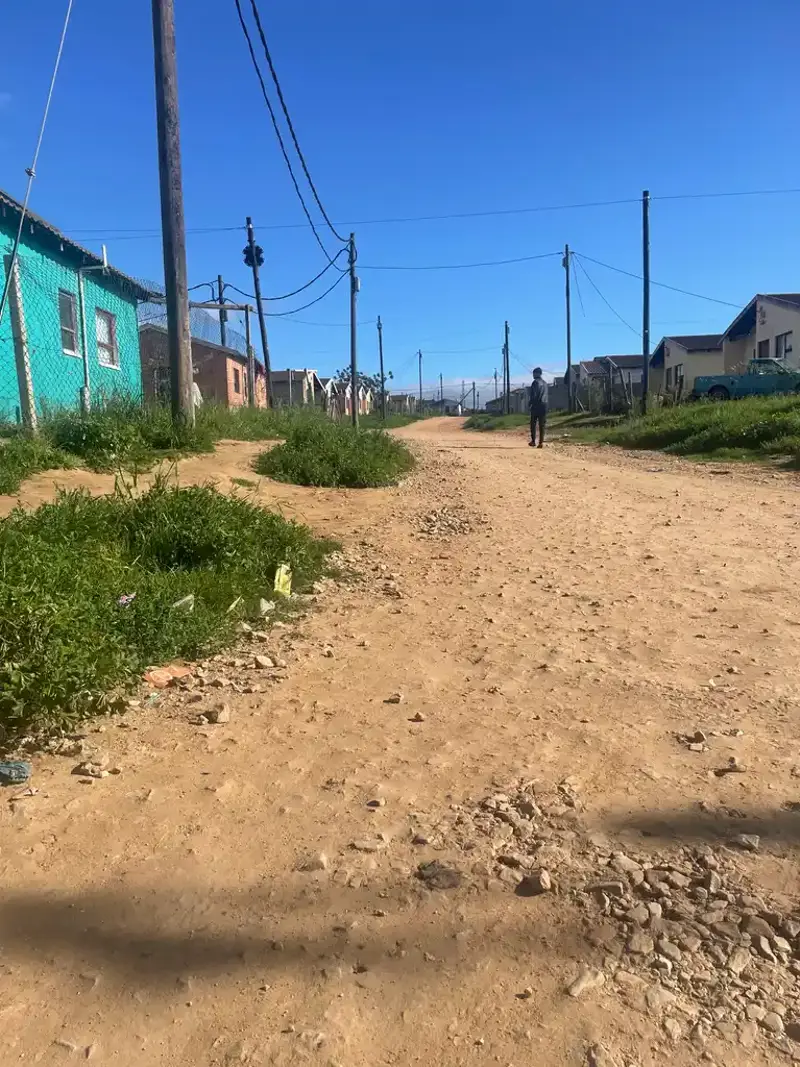
These numbers become more difficult to ignore when viewed through the experiences of people living in the metro's informal settlements.
In Rosedale Phase 2 in Kariega, 80-year-old Kathy Redlinghuis has spent two decades waiting for formal housing.
She says she has had little contact with her ward councillor, who is based in Motherwell in Gqeberha, about 35 kilometres away.
She is forced to pay children to fetch water from a tap about 200 metres away.
She has also used a mobile toilet for two decades and, when it rains, water enters her shack from the ground up and damages her belongings.
Her living conditions have left her disillusioned about the upcoming election.
“For me it is not worth the effort, because so far they haven't done what they've promised.”
Another resident and community leader, Gale Klaas, says communities often see political parties and councillors during election campaigns, but struggle to get responses once the votes have been counted.
“Before the vote, all the political parties are active ... but after that you don't see the branches; you don't see the councillors.”
The Auditor-General has also linked delays in housing delivery to the municipality's failure to implement projects amid ongoing political and administrative instability.
ACTIVE CITIZENSHIP: WHEN BUSINESS STARTS DOING THE MUNICIPALITY'S JOB
While municipal capacity has come under pressure, businesses and civil society organisations have increasingly stepped in to address some of the most visible problems.
The Nelson Mandela Bay Business Chamber, together with civil society partners, has spearheaded initiatives including Adopt-a-Leak, Adopt-a-Pump Station and infrastructure protection projects.
Businesses in the Struandale industrial area have also adopted substations, paying for surveillance and monitoring to protect electricity infrastructure from vandalism.
Business Chamber CEO Denise van Huyssteen says reliable municipal services are fundamental to economic growth and job creation, adding that businesses cannot operate effectively when municipal instability affects basic infrastructure.
City Paint & Tool is one such business that is playing an active role in improving the metro.
The company has been in Gqeberha for 97 years and has so far repaired about 1,000 potholes across the city, while also supplying materials to community groups and training residents to undertake repairs themselves.
The company has also supported community organisations with discounted paint for pedestrian crossings, road markings and other infrastructure.
It has also, together with NGOs and NPOs, trained young people to rehabilitate more than 500 fire hydrants across the metro.
These interventions demonstrate a striking feature of Nelson Mandela Bay's current reality: residents and businesses are increasingly becoming active participants in maintaining infrastructure and services that ordinarily fall under local government.
For some, this is evidence of civic resilience.
For others, it is evidence of just how much pressure the municipality is under.
WHAT HAPPENS NEXT?
Nelson Mandela Bay's electorate has been described as dynamic, with voters capable of shifting political support and producing coalition governments.
That makes the upcoming election about more than simply choosing a party.
It is also a vote on the kind of administration residents believe can stabilise the metro and restore confidence in local government.
The municipality enters the election period with significant challenges: unemployment above 30%, political instability, financial pressure, infrastructure failures and persistent concerns about service delivery.
For residents like Kathy Redlinghuis, it’s a bread-and-butter issue.
After two decades of waiting for a home, dealing with inadequate sanitation and struggling to access basic services, she wants to know whether the next government will finally deliver what previous administrations promised.
For businesses, the stakes are equally high.
A functioning municipality means reliable water and electricity, maintained roads, protected infrastructure and an environment capable of attracting investment and creating jobs.
In the upcoming local government term, it remains to be seen whether the municipality will heed the opportunity to move beyond years of political instability and begin rebuilding the institutions needed to support its economic potential.
Never miss a major story. Get breaking news and the latest developments from South Africa and beyond as they happen.


