
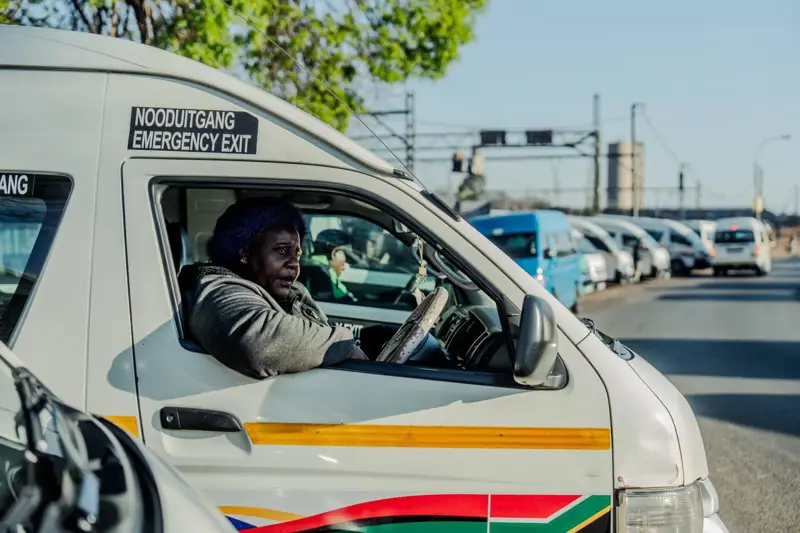
South Africa’s predominantly male-dominated taxi industry can be intimidating, but Tsakani Nkuna was undeterred. When she found herself with few other options to earn an income, she seized the opportunity and carved out a place for herself in an industry not traditionally associated with women.
Nkuna, who previously transported school children became a taxi driver after her scholar transport vehicle she had been using was damaged. Growing up in a household where taxis were already part of everyday life, the industry was familiar to her, but becoming a taxi driver herself was not something she had originally imagined.
“I didn’t wish to be a taxi driver,” Nkuna says. “This was the only job available. I had a driver’s licence, which is my only qualification, so it was the easiest job to get.” Her family, she says, was not surprised when she entered the taxi industry, but they were concerned about whether she would survive in such an environment.
“They did question whether I would manage, as a woman,” she recalls. Her first day confirmed some of those fears, at least for her. Nkuna says she was scared and drove much more slowly than usual, but once she entered Johannesburg’s CBD, she realised the job was not as intimidating as she had imagined.
“I was very slow, you could tell it was my first day,” she says. “But when I entered into the Johannesburg CBD, I realised there was nothing much to it, driving in the CBD. I started getting used to it.”
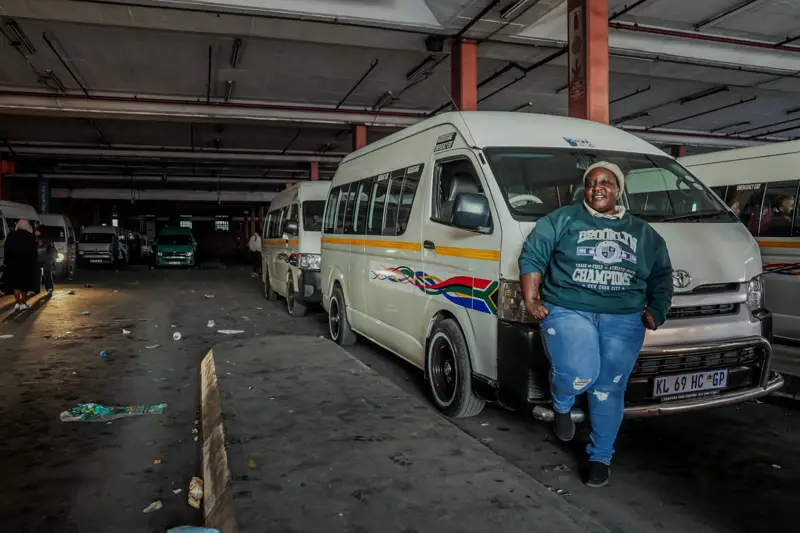
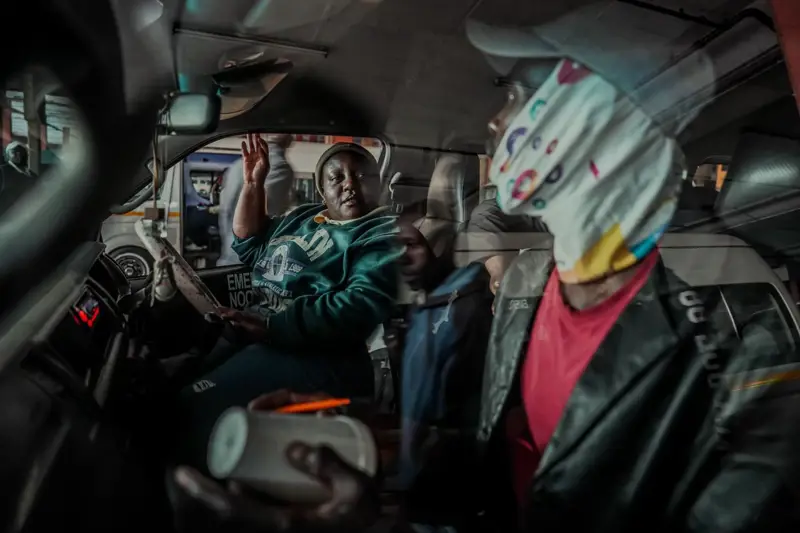
Nkuna says she is proud of her career, which allows her to look after her family. She is supporting a child who is at university, as well as her other children in primary school. The money she makes from taxi driving allows her to pay for necessities such as books and other expenses.
For Nkuna, this is an important reminder that the value of work should not be measured by stereotypes surrounding a particular profession.
“Me driving a taxi doesn’t mean I am not human. At the end of the day, I’m putting something on the table,” she says. Her experience also challenges the idea that working in the taxi industry prevents women from pursuing bigger ambitions. “Driving a taxi does not mean you are not a good person, or you can’t reach your personal goals,” she says. “We do achieve our goals.”
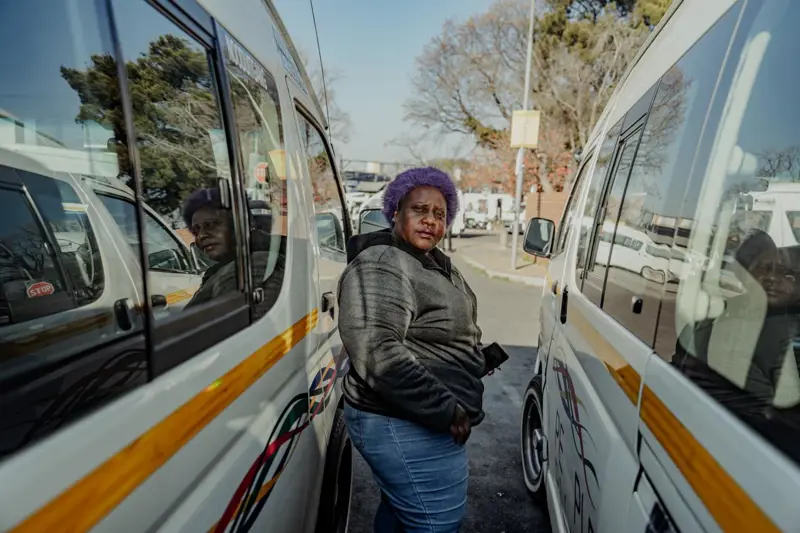
Nkuna describes the taxi she drives as her “starter pack”, a means to build towards the future she wants. “Obviously, I do have goals and I do want to achieve my goals,” she says.
Her message to other women is simply to not give up. “All of us, as women, let us start with what we have,” she says.
“We will get to where we want to be. We should not be afraid.”
For Nkuna, driving a taxi is about more than earning a living. It represents the ability to turn an available opportunity into a means of supporting her family, while challenging assumptions about the roles women can occupy.
Never miss a major story. Get breaking news and the latest developments from South Africa and beyond as they happen.


