
Non-governmental organisations catering to refugees and asylum seekers have appealed to South Africans that a distinction should be drawn between refugees, asylum seekers and economic migrants.
On Saturday, several groups came together to not just rally against xenophobia, but to advise and share with refugees, asylum seekers and migrants about their rights.
ALSO READ: Rights activists want clear distinction when grouping migrants.
The organisations also gathered to celebrate the 75th anniversary of the United Nations (UN)'s International Refugee Convention, which recognised the definition of a refugee and outlined the legal protections, rights and assistance to be given to refugees.
South Africa signed onto the convention in 1996, and these protections were incorporated into the Refugees Act.
Some of those who had gathered at the Jubilee Community Centre in Observatory, Cape Town, still bore the psychological scars of previous incidents of xenophobic violence, and the self-imposed deadlines and marches demanding that undocumented foreigners leave South Africa had caused anxiety.
A civil society leader, Flory Tshimbalanga-Kabambi, said asylum seekers and refugees differed from economic migrants. Those in the first two categories were fleeing violence and persecution. The only difference was that refugees were documented, while asylum seekers were still going through the process of being documented and were protected by the law.
"Anyone can be a foreigner, but people are different. There are people who've got documentation in terms of Section 24, there's those with Section 22, those with Section 27 and there's PR [permanent residence]. When you see people out there, everyone puts people under one basket, which is not supposed to be.
“People need to have the knowledge to know who is a refugee, who is an asylum seeker and who is a migrant. That's what this session is for today - we just want to bring it across to a lot of South Africans, there is a difference, you have to know that now. When you hear that word 'refugee', it means you yourself might be a refugee without knowing it - it means 'people on the move'," said Tshimbalanga-Kabambi.
Shaheed Mohamed, secretary of the Worker International Vanguard League, said the sporadic outbreaks of xenophobia were a "diversion" by the main political parties who have lost support.
"They need to create a diversion, in terms of maintaining their control," said Mohamed, adding that online bots were creating hysteria "in order to divide us".
Undocumented foreigners, he said, were a convenient underclass of slave labour used by big corporates to skirt South Africa's labour protections and do work that was often dangerous and for which they were underpaid.
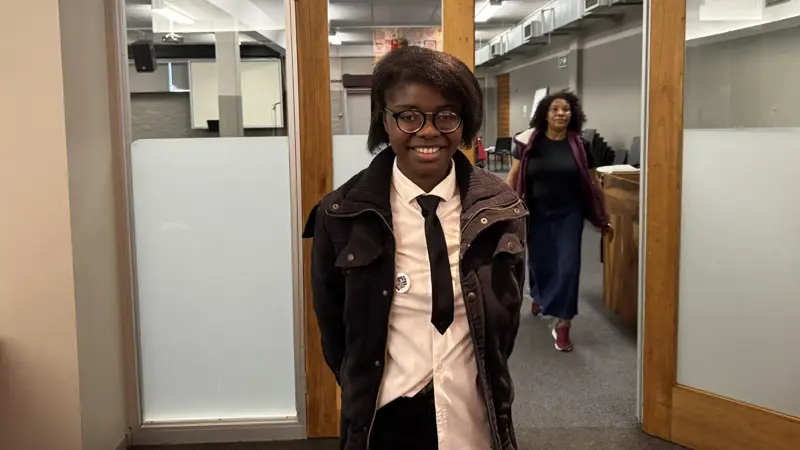
Twenty-four-year-old refugee Sunrise Ikanga said the renewed xenophobic tensions in South Africa reignited her own childhood trauma from 2008, when she was six years old and her neighbours in Joe Slovo, Milnerton, banged on the door of the home where her family lived, demanding that they leave.
"When I came here [to South Africa], it was around 2008, that's also when the xenophobic attacks happened, and I had to experience that as a six-year-old with my own eyes - how they were beating people, breaking into people's houses. They [the perpetrators] would mostly target township areas, and I also remember that my dad was beaten up because they asked him if he was South African, and he confirmed he wasn't," said Ikanga.
She said that because she is a refugee, she could not apply to any of the public universities in South Africa and instead had to attend a private institution.
The meeting also encouraged undocumented foreigners to regularise their documents before stricter rules on refugees and asylum seekers become law.
Never miss a major story. Get breaking news and the latest developments from South Africa and beyond as they happen.


