
Many foreign-owned businesses, along with smaller firms across Cape Town and surrounding areas, shut their doors on Tuesday after weeks of public warnings about nationwide protests linked to the self-imposed deadline set by March and March for undocumented foreign nationals to leave South Africa.
In Bellville, the usual morning rush-hour bustle was eerily quiet. The pavements around the busy transport interchange, normally teeming with hawkers selling their wares, stood empty as many migrants chose safety over the uncertainty surrounding the protests.
South African hawkers, asked about the absence of their competitors, were upbeat. Thousands of undocumented Zimbabweans and Malawians have sought repatriation as March and March's 30 June deadline approached. Those who could afford bus fares home took the opportunity to leave, many having heard only of South Africa's previous outbreaks of xenophobic violence.
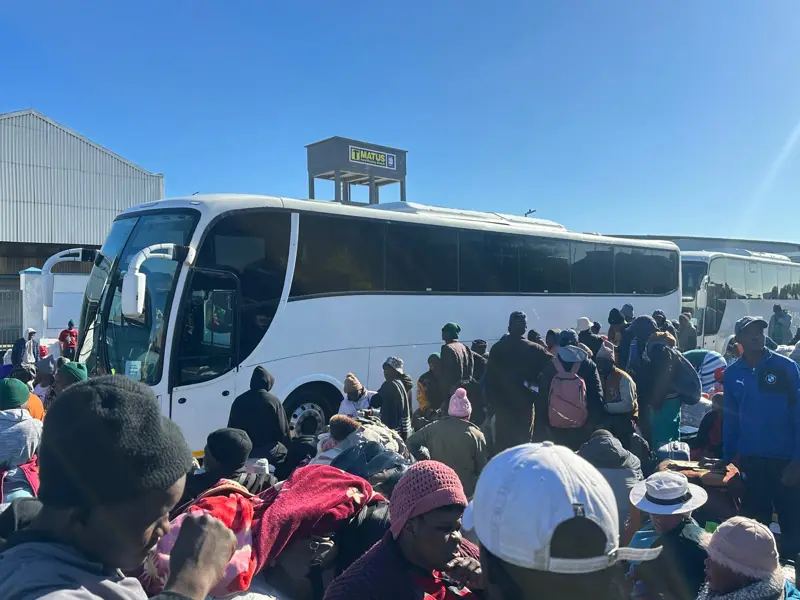
Asanda Booi, a hawker at the taxi rank, said 30 June would be remembered as a day when "money was all over".
"The people from there (across the Limpopo) are not here today, and we're enjoying the sale of our stock. There's business to be had left and right. So let's hope that they don't come back again because they have presented us (as South Africans) with many challenges," said Booi.
Without providing evidence, she accused foreign traders of selling drugs and said they refused to cooperate on coordinated pricing strategies.
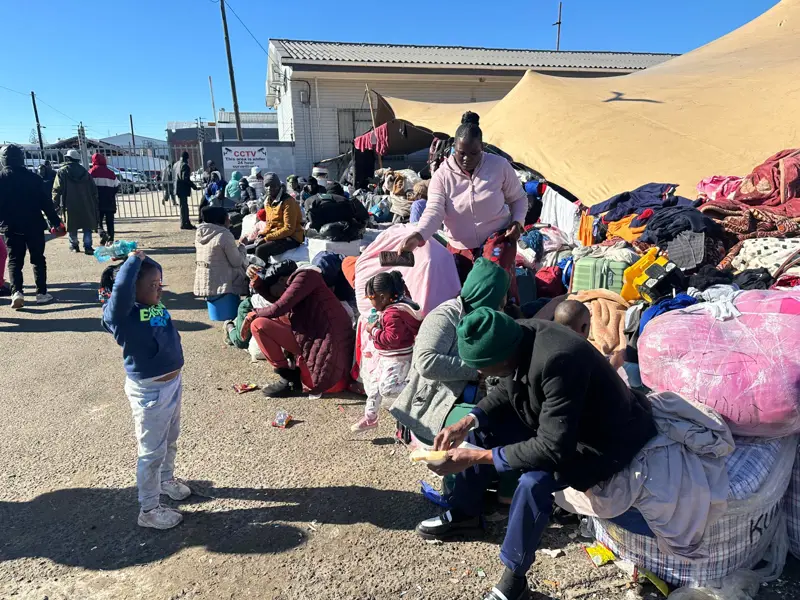
Swazi Jaxa echoed Booi's sentiments, describing 30 June as "Christmas in the middle of the year".
"It's been difficult for a long, long time. We haven't received such a warm welcome of customers since 2014. That was the last time we saw business booming. Today, it's quiet and people can walk freely because they had been robbed, and drugs were being sold around us. Today is quiet. It's the South Africa that we knew before. It's the Bellville that we knew before," said Jaxa.
While reiterating that foreign nationals were her "brothers and sisters", she added that "they are too much".
"They are also putting their stalls on the pavements where people walk, making it difficult for pedestrians to move around. Some people were scared to come to Bellville because of what was going on. The stalls are everywhere, they burn coals on the street. It's dirty! They are causing stress to our economy on top of everything else," said Jaxa.
She also believed the absence of her competitors would benefit South Africa's economy because, unlike some foreign traders, she did not send her profits to another country.
But Ethiopian businessman Yeshak Yusuf, who has lived in South Africa for 25 years, was in a reflective mood as he sat inside his van, drinking his morning coffee while looking over rows of closed shops, most of them owned by Ethiopians or Somalis. Yusuf said he had built a business and raised a family in Cape Town after arriving as a young man fleeing political persecution in Ethiopia.
"Everyone is concerned. I hope and pray that everything goes smoothly for the people of South Africa as well. Unfortunately, the children will also ask what happened on the 30th of June and so on," said Yusuf.
He said migrants had come to South Africa for many different reasons and that the government needed to address the issue.
"We don't want anyone to be harmed. I feel like we are in a valley that we can't get out of, but indeed we will get out, and I pray that everything goes smoothly," he said.
As in many townships across Cape Town, shops owned by foreign nationals in Joe Slovo, Milnerton, remained closed. Informal traders, from car washers to grilled meat vendors, were absent as local youths on the winter school holidays gathered in the streets.
In Bloekombos, the City of Cape Town's Safety and Security Directorate confirmed that officers fired a stun grenade to disperse what it described as "riotous" protesters after they had delivered a memorandum to the local police station. Metro Police and Public Order Police monitored a group of young people who had threatened to loot foreign-owned spaza shops in the area.
The group was unhappy with the police's response to a memorandum demanding that foreign nationals be removed from their community.


