

The history of Mexico at the FIFA World Cup is long; the country was one of the participants in the inaugural 1930 tournament in Uruguay.
For Mexicans, the tournament is a collective heartbeat, a generational inheritance, and a source of fierce national pride.
To understand Mexico's relationship with the World Cup is to look into the stands.
It is found in the iconic image of fans donning elaborate Aztec headdresses, vibrant mariachi sombreros, and the unmistakable green jerseys that transform foreign stadiums into seas of home turf.
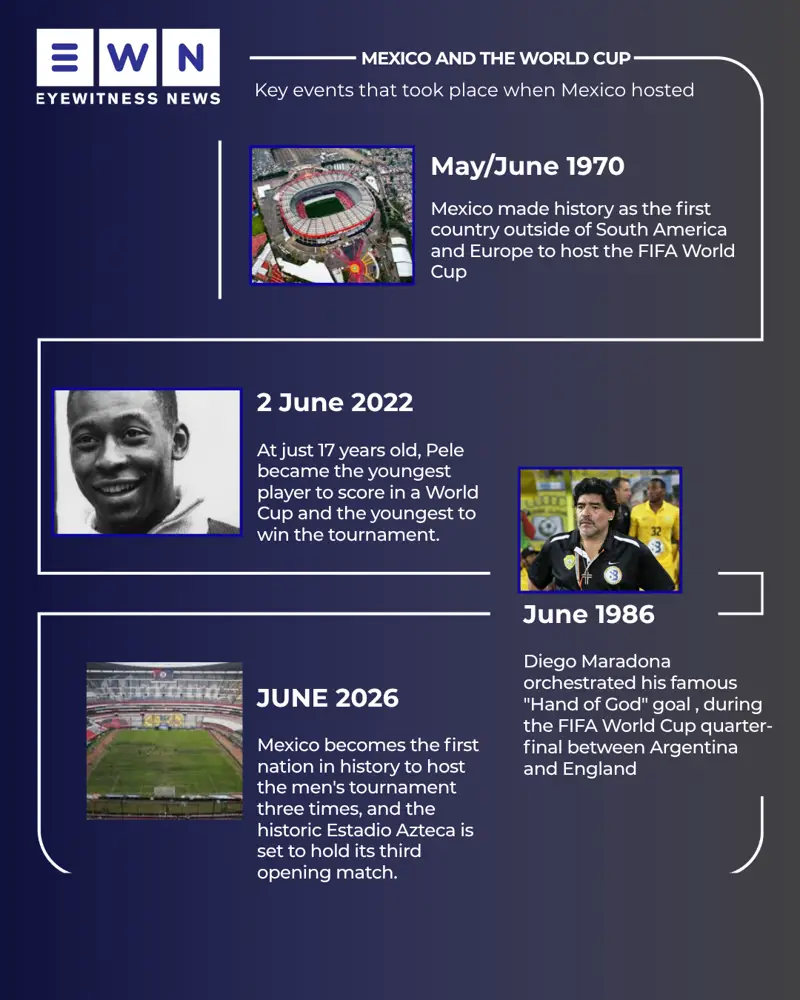
El Tricolor's greatest World Cup achievements are linked to playing on home soil. When the country first hosted the tournament in 1970, the team fed off the energy of a local crowd to reach the quarter-finals for the first time in history.
In 1986, they duplicated the feat, navigating their way to the quarter-finals once more before suffering a heartbreaking penalty shootout defeat against West Germany.
Those World Cups did more than elevate Mexico's football; they provided the backdrop for some of the sport's most legendary chapters. At Mexico City's fabled Estadio Azteca, Pelé cemented his timeless greatness with Brazil in 1970, and Diego Maradona orchestrated his famous "Hand of God" and "Goal of the Century" displays for Argentina in 1986.
Following Mexico's 1986 success and a tournament ban in 1990, the country entered an era of consistent frustration. Between 1994 and 2018, Mexico reached the knockout stages seven consecutive times, only to fall short in the Round of 16 every single time.
This period was dubbed the curse of the quinto partido (the fifth game) and remained a hurdle for the Mexican national team, despite the contributions of icons like Javier "Chicharito" Hernández, Cuauhtémoc Blanco, and Rafael Márquez.
The streak came to an end at Qatar 2022, where Mexico suffered a disappointing group-stage exit.
Now, as Mexico prepares to co-host the 2026 World Cup alongside Canada and the United States, the history comes full circle.
Mexico becomes the first nation in history to host the men's tournament three times, and the historic Estadio Azteca is set to hold its third opening match.


