
South Africa's GDP sees a 0.5% increase in the first quarter of 2026
Video · Brightcove player not connected in this prototype
South Africa's economy grew slightly in the first quarter of 2026, marking the sixth consecutive quarterly rise in economic activity.
The latest numbers show that real gross domestic product or GDP strengthened by 0,5% between January and March.
Statistics SA says finance, agriculture, trade and transport did the heavy lifting on the production (supply) side of the economy. The expenditure (demand) side was supported by a decline in imports and a rise in household consumption, government consumption and exports.
Nine out of ten industries were stronger, with the finance sector the main positive contributor on the production side, expanding by 0,9% and adding 0,2 of a percentage point to GDP growth.
Agriculture, trade, and transport and communication also made notable contributions, Stats SA reports.
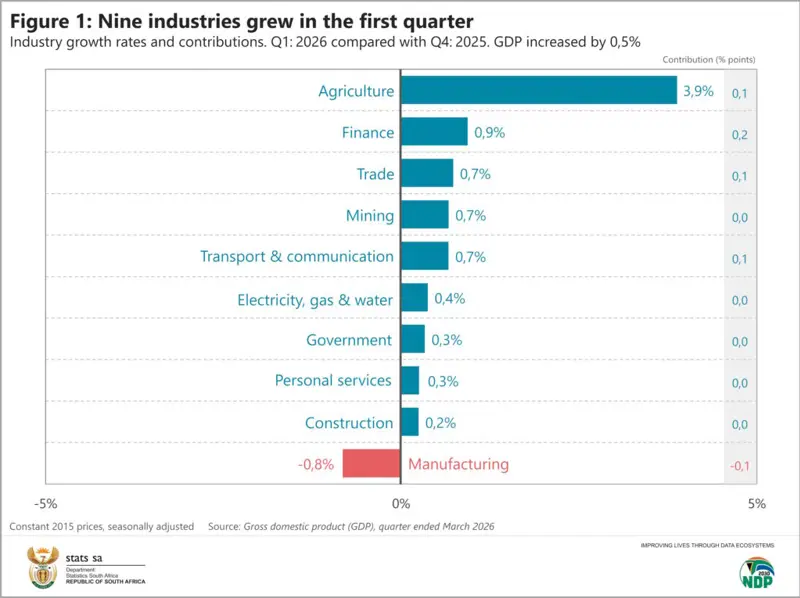
Manufacturing misfired in the first quarter, weakening by 0,8%, notching up a second consecutive quarter of decline.
The sector was dragged lower mainly by petroleum & chemicals; iron & steel; wood, and paper & publishing.
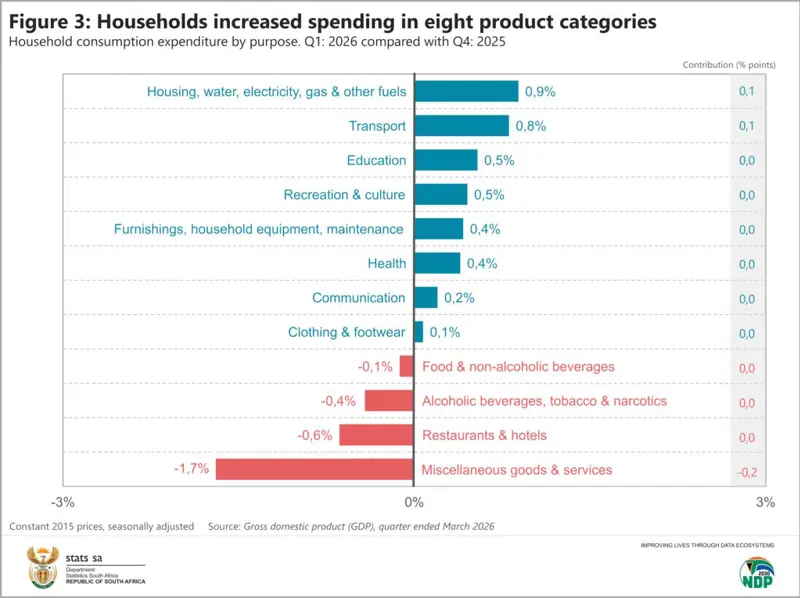
At the same time there was a marginal expansion in household consumption of 0,1% - the lowest growth rate in eight quarters. Household utilities (such as water and electricity) and transport were the largest positive contributors.
Stephen Grootes takes a closer look at the numbers with Thanda Sithole, FNB and WesBank senior economist.
Sithole says the 0,5% increase in GDP was a surprise to the upside after they'd pencilled in about 0,2% quarter-on-quarter growth.
However, he cautions that while the headline number might look positive, a closer look at the composition of growth shows that it remains uneven.
"On the demand side it was largely the net exports component of GDP that supported growth, so it's not that we saw strong growth in exports but rather a sharp decline in imports contributing to GDP growth."
He says the ongoing drop in manufacturing activity is particularly concerning, speaking to both weaker domestic demand and an external environment that remains challenging.
Sithole further highlights a decrease in gross fixed capital formation of 1,1%, mainly attributable to decreasing investment by the private sector as electricity costs increase and business confidence remains muted.
Scroll up to the audio player to listen to Thanda Sithole's analysis
