

"We have documented patterns of sexual violence, particularly in Darfur: gang rape, rape, torture amounting to sexual violence against women, girls and young girls, as well as forced impregnation. Those facts are well established.
We are talking about the largest humanitarian crisis on the planet, yet the world still somehow looks away.
It looks like a march towards a larger conflict at the moment because Sudan is no longer just a civil war. It has become the modern blueprint for how states unravel: foreign powers, proxy armies, resource battles, ethnic violence and a generation of children growing up with no knowledge of peace.
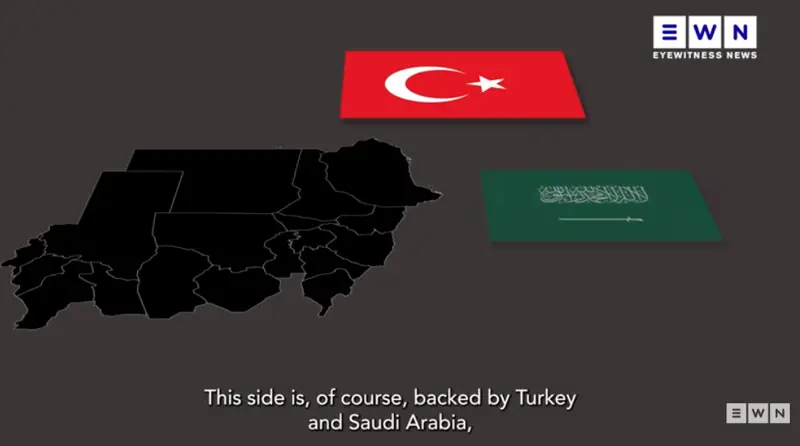
Increasingly, the finger is being pointed at the United Arab Emirates (UAE). The UAE has repeatedly been accused of helping arm and finance the Rapid Support Forces (RSF), the paramilitary force born out of the Janjaweed militia, which was accused of atrocities in Darfur in the early 2000s and is now accused of atrocities across Sudan.
The UAE denies the allegations.
There is also a new player. In the last month, Sudan has accused Ethiopia of supporting the RSF and allowing the group to launch attacks from Ethiopian territory.
It seems all of Sudan's neighbours are increasingly becoming involved. There have been reports that the RSF is launching attacks from Chad and that Chadian soldiers and citizens have been seen among the ranks of the RSF.
We have also seen allegations that arms are being brought in with the assistance of Colombian mercenaries.
Much of this comes down to a race for gold, oil, access to the Red Sea and regional influence.
Analysts warn the conflict could spread well beyond Sudan's borders. There is a very strong chance of spillover to the west, north and northwest.
Behind the geopolitics, accusations and scramble for influence, Sudan is collapsing in real time.
Some analysts now warn the country is sliding towards failed-state status, with little to no functioning governance in parts of the country.
Nowhere is that collapse more devastating than in Darfur. Aid routes are blocked, hospitals are shutting down and entire communities are starving.
Aid workers warn famine is no longer a threat, it is already happening.
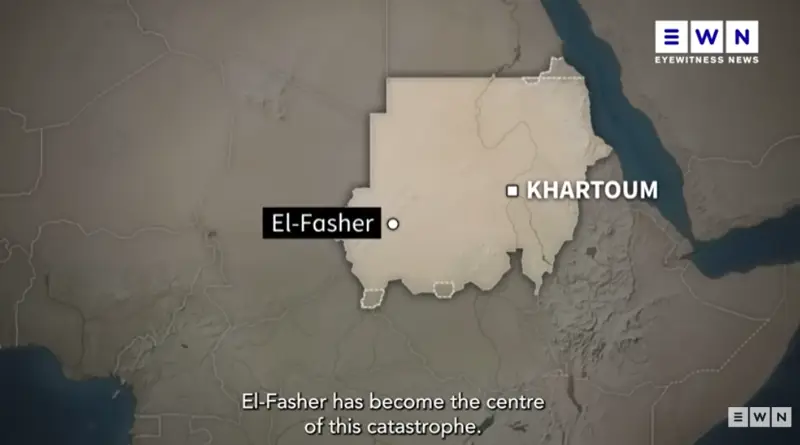
Aid agencies and rights groups now warn that parts of Darfur are showing signs of ethnic cleansing and possible genocide.
El Fasher has become the centre of this catastrophe.
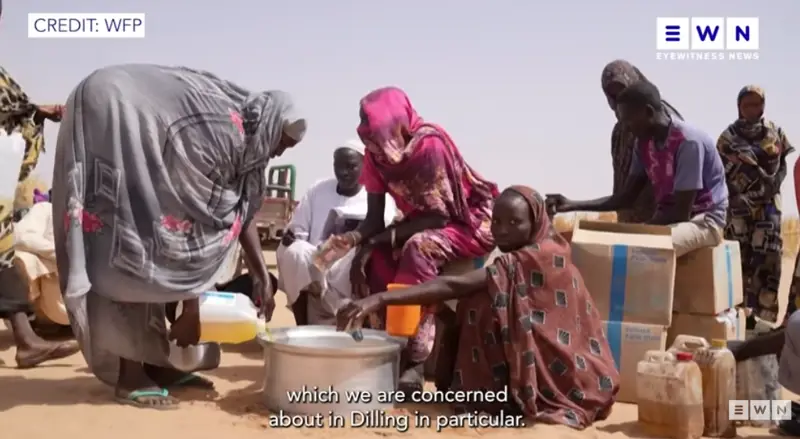
Aid workers say violence against women and girls has become like a pandemic. For many survivors, there is nowhere left to turn, no healthcare and no justice.
As the war deepens, religious and ethnic communities are becoming increasingly vulnerable.
In Sudan's Nuba Mountains, Christian communities say they are being deliberately targeted.
In late 2025, a drone strike hit a clinic treating civilians and schoolchildren in South Kordofan. Rights groups say dozens were killed, including children.
Perhaps the most disturbing aspect of the conflict is what is happening to children.
ALSO READ: 'Not my son's fault': The women bearing the children of Sudan's war rapes
Pope denounces violence in Sudan, renews call for ceasefire
That may become the defining image of modern Sudan: children with guns, no parents, no schools, no stability - only war.
And when that becomes normal, what exactly is left to rebuild?
For many Sudanese families, the war arrived almost overnight.
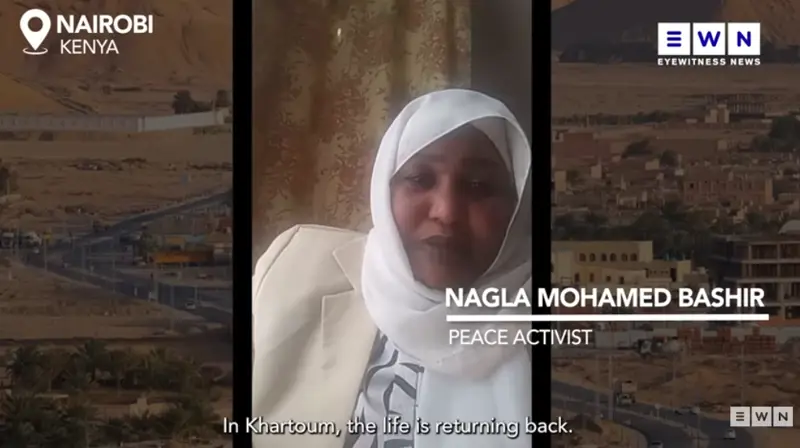
As fighting spread throughout Khartoum, civilians found themselves trapped inside a city collapsing in real time.
Then came the decision so many Sudanese had to make: stay and risk being killed, or flee into the unknown.
Sudan did not collapse overnight.
The roots of this war stretch back decades - through civil wars, ethnic violence, state-sponsored militias and the rule of former president Omar al-Bashir.
Despite being wanted by the ICC, Bashir travelled freely to countries including South Africa in 2015 and never stood trial in The Hague.
After his overthrow, the fragile alliance between Sudan's military and the RSF collapsed, plunging the country into open war.
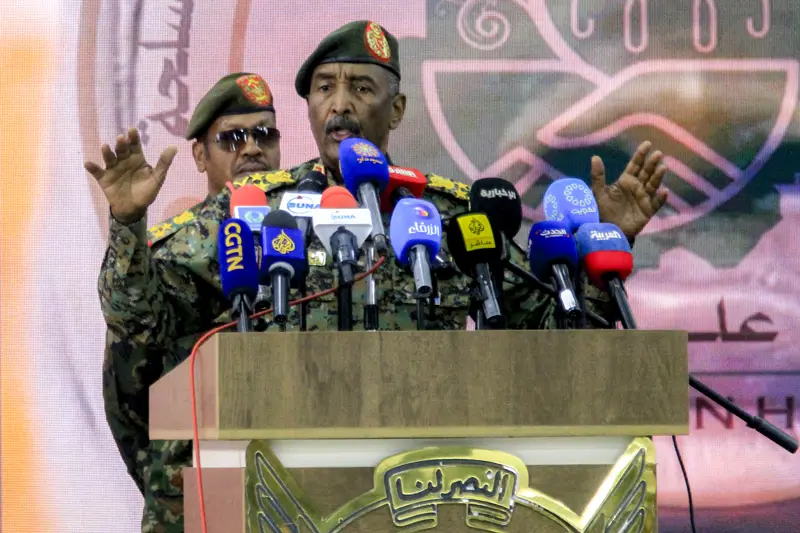
At the centre of the conflict are two men: General Abdel Fattah al-Burhan, head of the Sudanese Armed Forces, and Mohamed Hamdan Dagalo, better known as Hemedti, leader of the RSF.
But this stopped being merely a power struggle long ago.
It is now a fight over the future of Sudan. Both sides stand accused of war crimes.
The RSF has been accused of ethnic cleansing, mass rape and targeting non-Arab communities in Darfur.
The Sudanese army and allied militias have been accused of indiscriminate bombing, arbitrary arrests and targeting civilians suspected of supporting the RSF.
Diplomatic efforts have largely stalled.
The United Nations says it is attempting to coordinate the world's largest humanitarian operation, but it faces severe limitations.
Accountability is progressing slowly.
There is another troubling aspect of the war. People are disappearing.
More than 11,000 people are officially listed as missing, although observers believe the true number is far higher.
Families vanish while fleeing attacks. Refugee camps in Chad, Egypt and South Sudan are overwhelmed.
Aid agencies warn Sudan risks creating an entire lost generation.
What happens to a generation raised entirely in violence? A generation that learns survival before education?
Sudan is not hidden from the world. The world knows exactly what is happening.
When children carrying assault rifles becomes normal, what kind of country is left for them to inherit?


