
“I got to see a real mother, one who had gone through the pain of raising her children alone while fighting for the freedom of the country, for which her husband, Nelson Mandela, was imprisoned.
“She was also the most unmarried married woman,” said Zodwa Zwane, reflecting on struggle icon Winnie Mandela, whom she had the privilege of serving in her office for more than a decade.
Zwane was arguably one of the people closest to Mam’ Winnie until her dying days, an insight author Percy Vilakazi drew upon when writing his book, My Boss, Mrs Mandela.
Vilakazi said the book tells the story of Mam’ Winnie through Zwane’s eyes. While it is a story about Zwane’s life, it is also about her proximity to Mam’ Winnie as her personal assistant.
The author said: “History often remembers the people at the podium, the ones making speeches and those photographed in the foreground. But there are also people standing just outside the frame, holding things together and witnessing history in deeply personal ways. That was who Zwane was.”
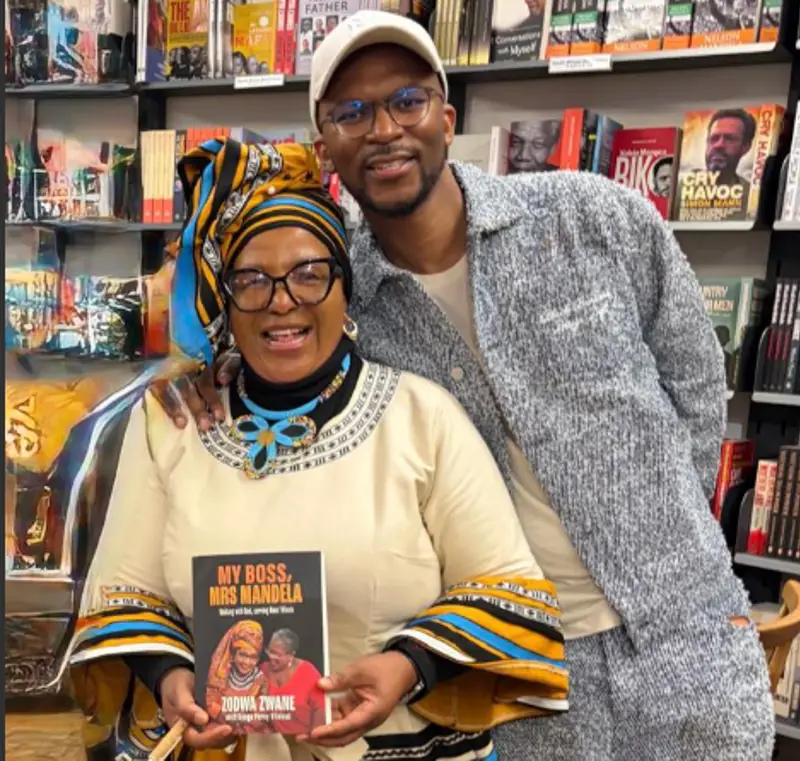
He added: “She wasn't simply an assistant; she was a confidant, a witness. She protected Mam’ Winnie and, at times, served as a spiritual anchor.”
At the book launch, Zwane said she believes God gave her the job of serving Mam’ Winnie because it was a task that did not come easily. Staying was even harder, but she remained because she believed it was what she was destined to do.
Zwane grew up in Zola, Soweto, and still lives there, much like Mam’ Winnie, who believed there was no need to move away from the community she served.
Over the years, their bond was strengthened by shared experiences and conversations about their lives.
Zwane said and writes in the book: “My son’s father was imprisoned and later executed by the apartheid government,” while Mam’ Winnie shared stories from her 491 days in detention and solitary confinement.
The two women were staunch Christians and Zwane said Mam’ Winnie often asked her to pray for her during difficult times.
“As a mother, she never even went for counselling because she didn’t want people to sell the stories of her pain. But she shared some of those experiences with me.”
Zwane said: “I saw how she sacrificed her relationship with her children because of the time they spent apart. But I also saw how fond she grew of her grandchildren, who I would argue she may have loved a little more than her children.”
When asked what she wanted people to know about Mam’ Winnie, Zwane said: “She was human. Being the Mother of the Nation came at a high cost. She was also hilarious. She loved cooking for her children, believed in prayer and forgiveness, and died feeling that this was a half-baked freedom.”
Vilakazi said public narratives often flatten people, showing what someone did but not what it took. He believes we live in a time when people want clear answers, to know whether someone was a hero or a villain.
“What I discovered was that real people don't exist in those categories. The story about Mam’ Winnie in the book doesn't try to resolve those tensions. I think it holds the tension. It allowed me, as a writer, to see both the public figure and the private person and to understand that those two things can exist at the same time, that someone can be controversial and still be tender, that they can be strong and still be flawed.”
He added that the book is an important contribution to the narrative around women because many who perform emotional and invisible labour often go unrecognised.
"In many ways, the book is saying that those voices matter too."
"They carry texture, intimacy and emotional truth that we often miss when we focus only on public narratives. I hope readers walk away with empathy, not necessarily agreement on everything surrounding Mam’ Winnie, but empathy and an understanding that people are complex, history is layered, and that sometimes the most revealing stories come from those who stand quietly beside history while it is unfolding."


